
Quick answer
In a poorly maintained system, compressed air leaks can waste 20–30% of a compressor's output, according to U.S. Department of Energy guidance. Most leaks come from push fittings, worn tubing, valves, FRL units and drain traps. A regular leak survey with an ultrasonic detector, followed by replacing the failed parts, can reduce compressed air energy use by around 10–15% with a fast payback.
What Compressed Air Leaks Really Cost
Compressed air is often called the most expensive utility in a plant. A compressor needs roughly 7–8 horsepower of electricity to deliver 1 horsepower of useful work at the tool, so every litre of air that escapes is energy you have already paid for.
U.S. Department of Energy figures estimate the yearly cost of a single leak, running continuously at 100 psig (about 7 bar):
| Leak size (hole diameter) | Estimated cost per year* |
|---|---|
| 1/16 inch (1.6 mm) | about US$523 |
| 1/8 inch (3.2 mm) | about US$2,095 |
| 1/4 inch (6.4 mm) | about US$8,382 |
*DOE basis of US$0.05 per kWh. Your real cost depends on your electricity tariff and running hours.
A typical plant has dozens of small leaks. Twenty 1/16-inch leaks cost as much as a single 1/4-inch leak, and nobody notices them over the noise of a running line. Leaks also cost more than electricity:
- Pressure drop: cylinders and tools work slower or stall, causing rejects and slower cycles.
- Compressor wear: compressors run longer and start more often, so they need service sooner.
- Unnecessary capacity: many plants buy an extra compressor when fixing leaks would have been enough.
Why Leaks Are Worse in Qatar
Pneumatic systems in Qatar face conditions that speed up wear on seals, tubing and fittings:
- High heat: summer temperatures above 45°C, and higher inside panels and plant rooms, harden O-rings and soften plastic tubing.
- Humidity and condensation: coastal sites such as Ras Laffan, Mesaieed and Doha Port see high humidity, which puts water into the air lines and corrodes fittings.
- Dust and sand: fine dust gets past worn seals and scores valve spools and cylinder rods.
- UV exposure: sunlight degrades standard polyurethane tubing on outdoor equipment.
The winter months (November to March) are the best time to survey and repair. Plants are cooler, many have planned maintenance windows, and parts replaced now will be ready before next summer's peak load.
Where Compressed Air Leaks Happen Most
| Component | Typical cause | Fix |
|---|---|---|
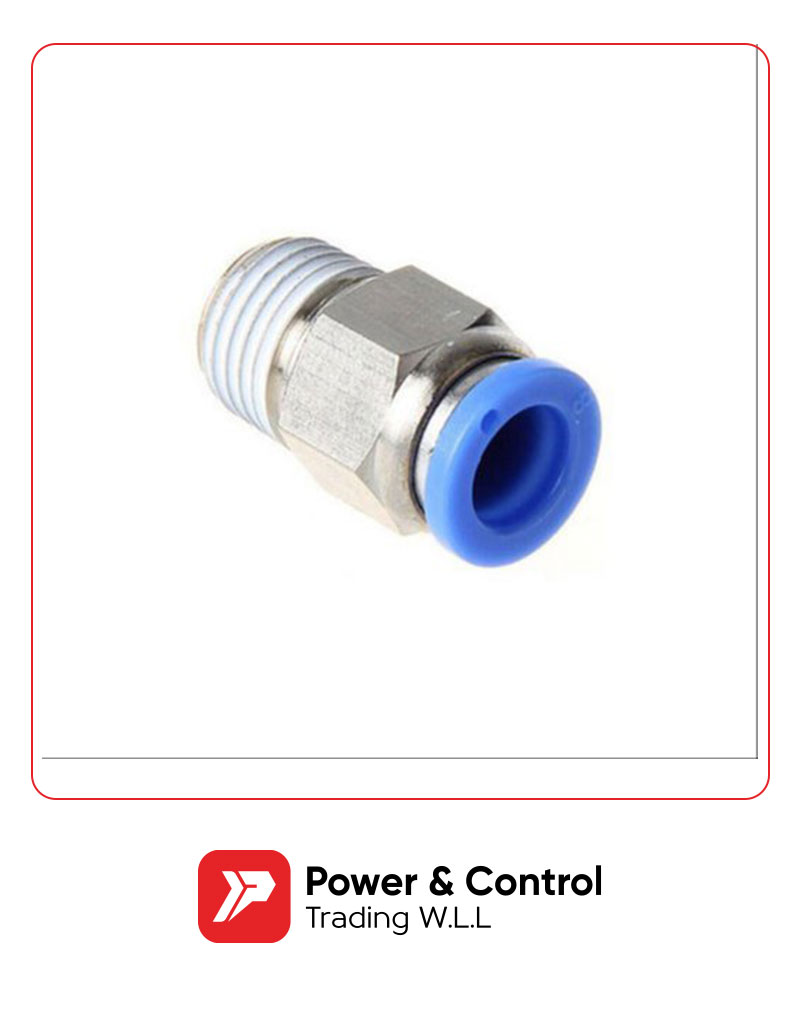
| Push-in fittings | Worn collet or O-ring, tube cut at an angle, tube not fully inserted | Replace fitting; cut tube square with a proper tube cutter |
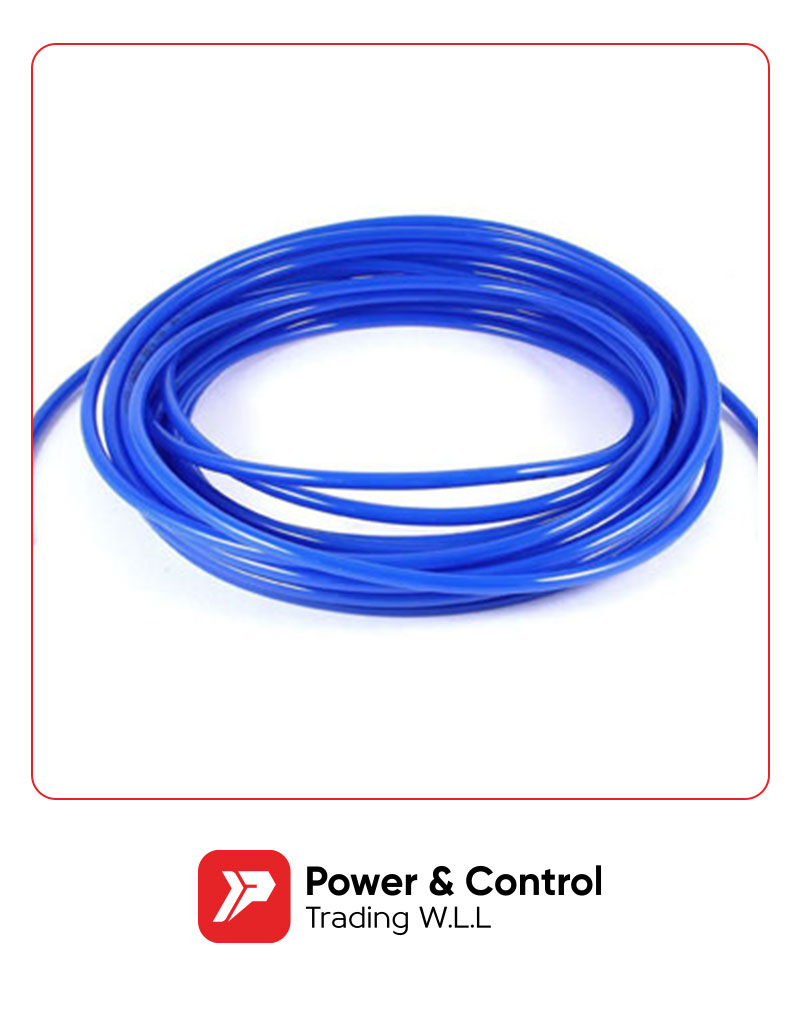
| Tubing and hoses | Cracks from heat, UV or rubbing; kinks | Replace with heat- or UV-resistant tubing; add guides |
| Threaded connections | No sealant, wrong thread type (BSP vs NPT) | Re-seal with correct thread sealant; match thread standards |
| Valves | Worn spool seals, damaged valve seats | Replace seal kit or the valve |
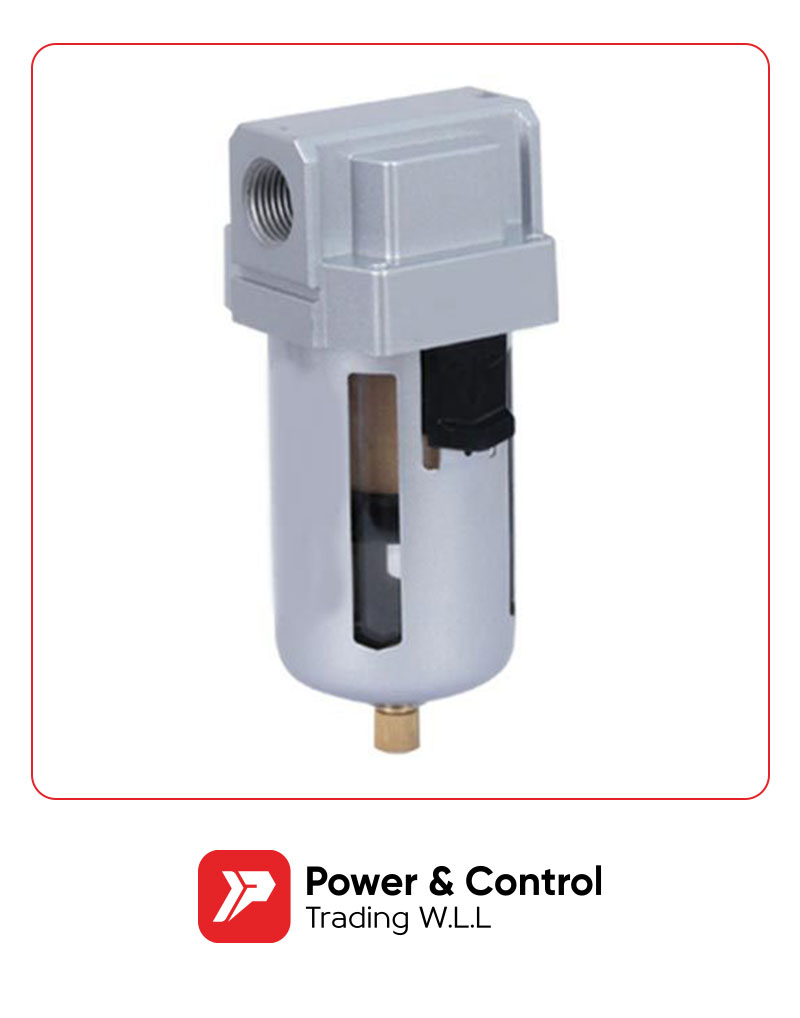
| FRL units | Cracked bowls, worn regulator diaphragms | Replace bowl, diaphragm or complete unit |
| Condensate drains | Drain stuck open, or timer drains set too long | Fit zero-loss level-sensing drains |
| Cylinders | Worn rod or piston seals | Reseal or replace the cylinder |
| Quick couplers and hose reels | Worn seals; left connected when not in use | Replace couplers; isolate unused drops |
Fittings, tubing and connections are usually the largest group of leaks, which is good news: they are also the cheapest and fastest parts to replace.
How to Find Compressed Air Leaks
1. Measure your baseline
With production stopped but the compressor running, record how long the compressor runs loaded versus unloaded. If it keeps loading when nothing is using air, all of that air is leaking. Many plants are surprised to find 20–30% of capacity going to leaks.
2. Use an ultrasonic leak detector
Escaping air produces ultrasonic sound that people can't hear, but a detector can, even on a noisy production floor. It is the fastest and most accurate survey method.
3. Soap solution for small areas
Brush leak-detection fluid onto fittings and joints and watch for bubbles. It is slow, but it pinpoints the exact leak point.
4. Tag every leak
Hang a numbered tag on each leak and record the location, component, size and part number needed. This becomes your repair list and your parts order.
How to Fix Leaks for Good
- Replace, don't patch. Taping a cracked tube or overtightening a worn fitting only buys a few weeks.
- Use quality components. Genuine push fittings from brands such as Parker Legris hold their seal longer in heat and vibration than low-cost copies.
- Choose the right tubing. Use polyurethane for flexibility, nylon (polyamide) for higher heat and pressure, and UV-stabilised tubing outdoors.
- Lower the pressure. Every bar of extra system pressure increases leak flow. Set regulators to the lowest pressure your equipment needs.
- Isolate idle machines. Fit a shut-off or solenoid valve so idle lines aren't kept pressurised.
- Keep air clean and dry. Good filtration and working drains protect seals in every downstream valve and cylinder.
A 30-Day Leak Reduction Plan
- Week 1, measure: record compressor load and unload time, or energy use, with production stopped.
- Week 2, survey: walk every line with an ultrasonic detector and tag every leak.
- Week 3, order parts: send the tag list (part numbers, sizes, thread types) to your supplier as one order.
- Week 4, repair and re-measure: fix the largest leaks first, then measure again to calculate the saving.
- Repeat every 3–6 months: new leaks appear constantly, so make surveys routine.
Frequently Asked Questions
How much compressed air is lost to leaks?
U.S. Department of Energy guidance says poorly maintained systems can lose 20–30% of compressor output to leaks. Well-maintained systems can keep leakage below 10%.
What is the most common source of compressed air leaks?
Fittings, tubing and connections are the most common sources, followed by valves, FRL units, condensate drains and cylinder seals.
How often should a plant check for leaks?
At least every 3–6 months, and after any major maintenance or line change.
Can I fix a leaking push fitting?
First cut the tube square and push it fully in. If it still leaks, replace the fitting; a worn collet or O-ring can't be reliably repaired.
Where can I buy pneumatic fittings and tubing in Qatar?
Power & Control Trading W.L.L. in Doha supplies pneumatic push fittings, tubing, valves, cylinders and FRL units, with delivery across Qatar. Call or WhatsApp +974 7133 7700.
Send Us Your Leak List
Finished your survey? Send us your tag list or part numbers and we'll quote all the fittings, tubing and valves you need in one go, with delivery across Qatar.
Sources
- U.S. Department of Energy, Improving Compressed Air System Performance: A Sourcebook for Industry
- Reliability Magazine, "Compressed Air Leak and Energy Waste Statistics: What the DOE Data Says"